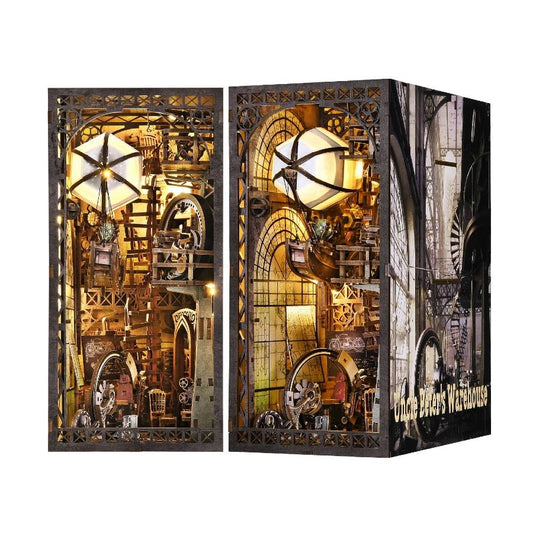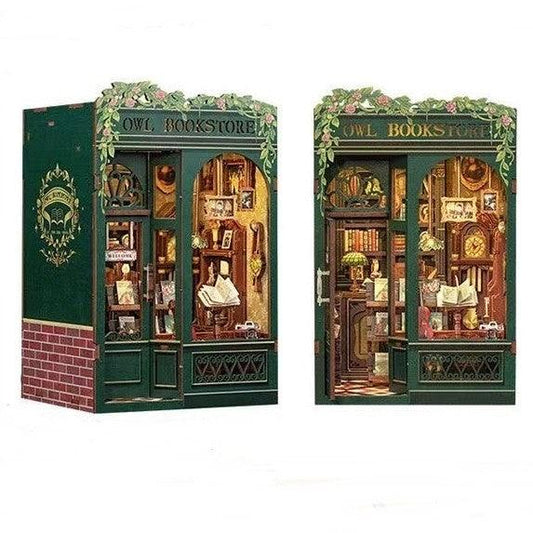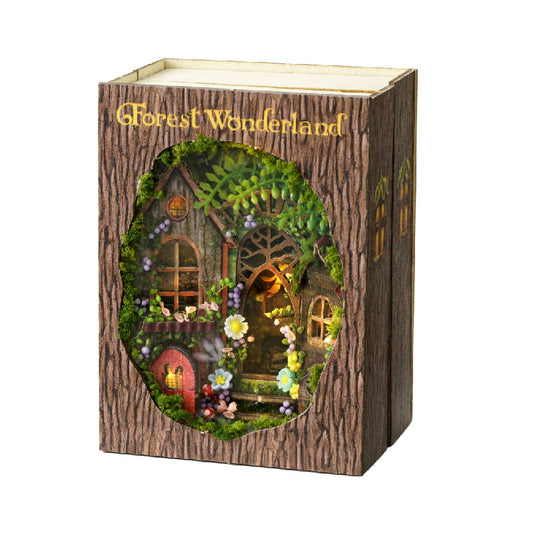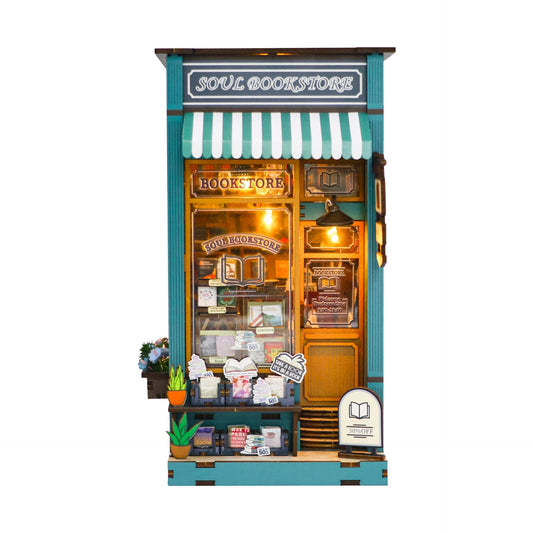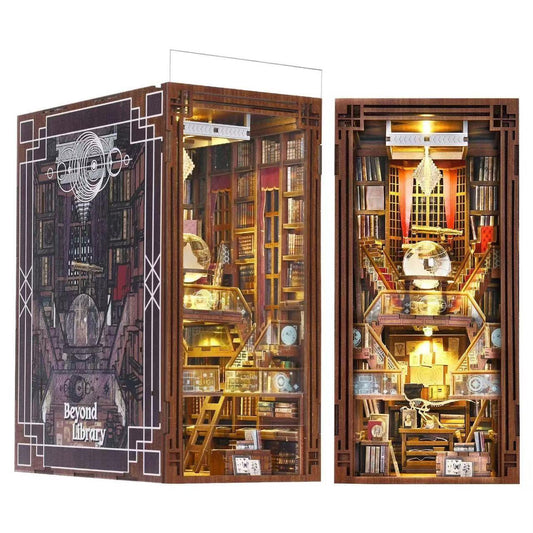

Starting your first DIY book nook should feel exciting — not intimidating.
There is something wonderfully satisfying about opening a box of tiny wooden pieces, miniature furniture, lights, and decorative details, then slowly watching them become a little world of your own.
But if you've never built a miniature kit before, choosing your first book nook can be confusing.
Should you start with the prettiest one? The smallest one? The kit with the fewest pieces? And how difficult are book nook kits to build in the first place?
The good news is that you don't need years of crafting experience to enjoy one.
The best book nook kits for beginners combine a beautiful finished scene with manageable assembly, clear instructions, and enough detail to make the process rewarding without becoming overwhelming.
Here's what to look for when choosing your first one.
What Makes a Book Nook Kit Beginner-Friendly?
A beginner-friendly book nook isn't necessarily the simplest-looking design.
What matters more is how approachable the building process feels.
A good first kit should give you enough detail to enjoy the miniature-making experience while still allowing you to see steady progress as you build.
Look for a few key qualities.
Clear Assembly Steps
Good instructions make an enormous difference.
Your first book nook should guide you through the construction in a logical sequence rather than leaving you to figure out where dozens of tiny pieces belong.
Before starting, it's always worth reading through the instructions once from beginning to end.
That gives you an idea of how the different sections fit together before you begin gluing anything.
Pre-Cut or Pre-Finished Parts
Many modern DIY book nook kits include precisely cut wooden components and printed decorative pieces.
These can make a first project much more approachable because you can focus on assembly and decorating rather than creating every miniature element completely from scratch.
You'll still get the satisfaction of building something with your own hands — just without needing advanced miniature-making skills.
Manageable Detail
Tiny details are part of what makes book nooks magical.
But there is a difference between beautifully detailed and unnecessarily complicated.
For your first project, look for a design with recognizable structural sections — walls, shelves, doors, furniture, stairs, or shopfronts — rather than hundreds of extremely delicate decorative components.
A Design You Actually Love
This may be the most important factor.
Your first book nook will probably take several creative sessions to complete.
Choose a tiny world that makes you want to come back to the table.
A cozy library, glowing street, peaceful Japanese-inspired scene, miniature café, flower shop, or mysterious study can all make wonderful first projects if the atmosphere genuinely appeals to you.
The Best Types of Book Nook Kits for Beginners
Rather than looking for one universal "best" kit, it is more useful to choose a style that matches the kind of building experience you want.
Here are some of the most beginner-friendly directions to consider.
1. Cozy Library Book Nooks
For book lovers, a miniature library is one of the most natural places to begin.
These designs often feature recognizable elements such as bookshelves, reading desks, chairs, lamps, and miniature books.
That familiarity can make the assembly process feel more intuitive.
Once finished, a glowing miniature library also blends beautifully into a real bookshelf.
Best for: readers, cozy décor lovers, and anyone who wants their first book nook to feel timeless.
2. Café & Bookshop Book Nooks
Tiny cafés and bookshops are another lovely beginner option.
Rather than relying on complicated fantasy architecture, much of their charm comes from familiar everyday details — counters, tables, shelves, windows, plants, cups, books, and warm lights.
They are especially satisfying if you enjoy arranging miniature objects and creating a scene that feels lived in.
Best for: cozy interior lovers and anyone who enjoys lots of small decorative details.
3. Japanese-Inspired Book Nooks
Japanese-inspired miniature scenes can be wonderful first projects for people who prefer a calmer visual style.
Wooden architecture, lanterns, small gardens, narrow streets, and warm interiors create beautiful depth without necessarily requiring an extremely busy composition.
Once illuminated, these scenes can create a particularly peaceful warm glow between books.
Best for: lovers of quiet spaces, traditional architecture, warm lantern light, and serene miniature worlds.
4. Garden & Botanical Book Nooks
If your reading corner is already filled with plants, a botanical book nook can feel perfectly at home.
These designs may include miniature flowers, vines, conservatories, garden paths, tiny pots, or greenhouse-inspired spaces.
The building process often involves more decorative arranging, which can be especially enjoyable if you like adding small personal touches.
Best for: plant lovers, cottagecore enthusiasts, and anyone drawn to soft romantic details.
5. Simple Street & Alley Book Nooks
One of the most effective book nook designs is also one of the simplest ideas: a tiny street disappearing into the distance.
Shopfronts, windows, lanterns, signs, plants, and pathways create perspective that makes the scene appear much deeper than the actual shelf.
For a beginner, this can be especially rewarding because even a relatively compact structure can create an impressive finished effect.
Best for: beginners who want a dramatic bookshelf transformation without choosing an overly elaborate interior.
6. Pre-Colored Wooden Book Nook Kits
If you're nervous about painting or finishing miniature pieces, consider a kit with pre-colored or printed components.
These allow you to concentrate more on fitting pieces together and arranging the scene.
That doesn't make the experience less creative.
You're still building an entire miniature environment — but some of the more time-consuming finishing work has already been done for you.
Best for: absolute beginners and anyone who wants a more relaxed first build.
What Should Beginners Avoid?
Your first book nook doesn't need to be the easiest kit available.
But there are a few things worth approaching carefully.
Extremely High Piece Counts
More pieces can mean more detail, but they also usually mean more time and repetition.
If this is your first miniature project, you may enjoy a medium-complexity kit more than an enormous project that takes weeks to finish.
Very Delicate Construction
Extremely tiny furniture, complicated wiring, intricate paper crafting, or unusually fragile architectural components may require more patience and precision.
There's nothing wrong with choosing these later.
Your first project should help you discover whether you actually enjoy miniature building.
Choosing Only by the Finished Photo
This is an easy mistake.
A spectacular finished book nook may look irresistible, but remember that you're buying the building experience as well as the finished decoration.
Check the estimated assembly time, dimensions, materials, lighting information, and product details before choosing.
How Long Does a Beginner Book Nook Take to Build?
There isn't one universal answer.
Depending on the design, your experience level, and how slowly you like to work, a DIY book nook may take anything from several hours to several relaxed evenings.
And that's perfectly fine.
DIYSLAND isn't about racing toward the finished result.
Put on some music, make a cup of tea, organize your pieces, and work on one small section at a time.
The miniature world gradually appearing in front of you is part of the experience.
For many people, that peaceful creative time becomes just as enjoyable as displaying the finished piece.
What Tools Does a Beginner Need?
You don't need an elaborate craft studio to build your first book nook.
Depending on the individual kit, a few simple tools are usually enough:
- Craft glue
- Tweezers
- Small scissors
- Precision craft knife
- Ruler
- Small clips or clamps
- A clean cutting surface
Always check the instructions and product information for your particular kit, as included tools and materials vary.
If you're preparing for your first project, read our What Tools Do You Need for a DIY Book Nook Kit? guide for a more complete beginner setup.
7 Tips for Building Your First Book Nook
Your first build becomes much easier when you don't rush it.
1. Read the instructions before starting.
Understanding the general order of assembly can prevent mistakes later.
2. Organize the pieces first.
Separate structural pieces, miniature decorations, lighting components, and hardware before assembly.
3. Dry-fit before gluing.
Check how pieces fit together before applying adhesive.
4. Use only a small amount of glue.
More glue doesn't necessarily create a stronger miniature — it often just creates more cleanup.
5. Work in sections.
Finish one wall, room, floor, or structural area before moving to the next.
6. Test the lighting before closing the structure.
It is much easier to solve a lighting issue while the wiring is still accessible.
7. Don't worry about perfection.
Tiny handmade variations are part of the charm.
This is your miniature world, not a factory production line.
Are Book Nook Kits Hard for Beginners?
Usually, no — but they do require patience.
Book nook building is less about advanced artistic talent and more about following instructions, handling small pieces carefully, and taking your time.
If you can work through a project step by step, you can probably build a book nook.
Your first few sections may feel slow.
Then something changes.
The walls begin to stand.
The furniture appears.
Tiny books fill the shelves.
The lights come on.
Suddenly the collection of little pieces on your table becomes a place.
That's usually the moment people understand why miniature building can become such an addictive creative hobby.
If you're still wondering whether this hobby is right for you, read Are Book Nook Kits Good for Beginners? for a more detailed introduction.
Book Nook Kit or Miniature House for Your First Project?
Both can make excellent beginner projects.
The main difference is how you want to display the finished piece.
A book nook kit is designed primarily to sit between books, using perspective and lighting to create the illusion of a world continuing deeper into your bookshelf.
A miniature house kit is generally a freestanding model designed to be appreciated more like a small dollhouse or decorative object.
If you're primarily a reader and want something for your bookshelf, start with a book nook.
If you love miniature interiors and want to view your creation from different angles, you may prefer a miniature house.
You can explore the differences in our guide Book Nook Kit vs Miniature House Kit: What's the Difference?
How to Choose Your First Book Nook
If you're still deciding, keep it simple.
Ask yourself three questions:
Which tiny world would I most enjoy spending time inside?
Does the estimated difficulty fit the amount of patience and time I have?
Will I enjoy seeing this miniature on my bookshelf after I've finished building it?
If the answer to all three is yes, you've probably found a good first kit.
Don't worry about finding the objectively "best" book nook.
Choose the one that makes you want to start building.
Your First Tiny World Starts Here
Your first DIY book nook doesn't need to be perfect.
It simply needs to be yours.
Piece by piece, an empty workspace becomes a tiny library, a glowing street, a peaceful garden, or a cozy little shop.
Then one evening, you'll switch on the lights and see the finished miniature glowing quietly between your books.
That small moment of satisfaction is what makes the hobby special.
Explore DIYSLAND's DIY Book Nook Kits and find a charming project for your next slow evening.
Create a tiny world. Bring a little magic home.